
The ideas live here. The platform is next.
Mycosoft.com
Built with biology.
Connected to the world.
Discover the devices, intelligence and tools connecting Mycosoft’s vision to the living world.
From the company
See the vision in motion.
Company films introduce the people, systems and ideas behind Mycosoft.
Computation,
rooted in fungi.
Mycosoft is building environmental intelligence, biological interfaces, and grounded AI from the logic of spores, hyphae, and mycelium. The ambition is not to romanticize nature. It is to learn from it, measure it, model it, and build with it.
Our vision connects a founder’s story, a scientific thesis and an invitation to build. Explore the products and platforms at Mycosoft.com.
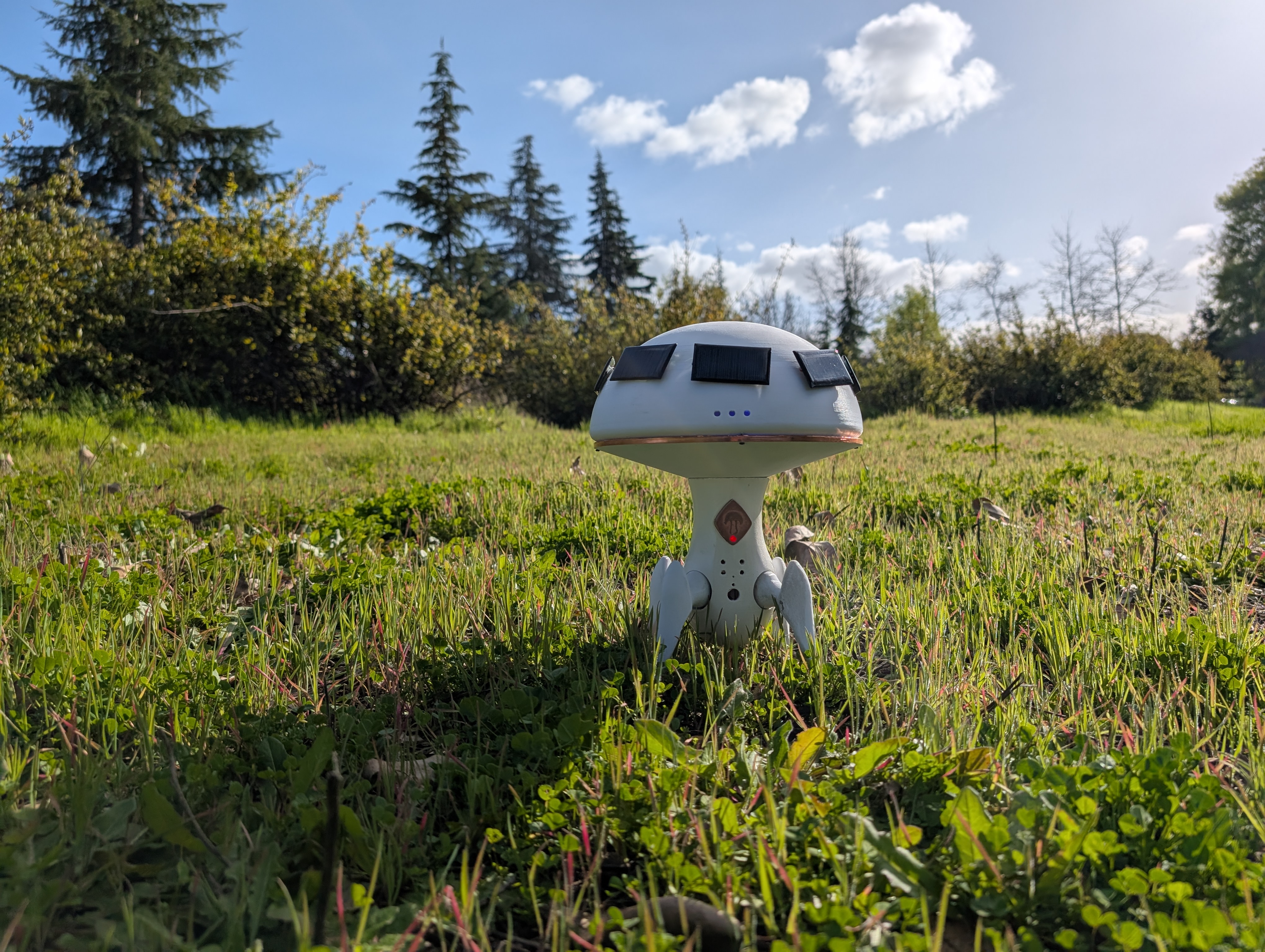
As of October 2026
The mushroom is the fruiting body.
The network is the system.
Mycosoft treats fungi not as ornament, but as infrastructure: a living model for distributed sensing, resource allocation, memory, and adaptation.456
The work, in time
From research to public demonstration.
- 2014
Research takes root.
The first connections between living fungi, electronics and distributed computing begin the Mycosoft story.
- 2022
Mycosoft steps into view.
A public mission takes shape: build computing systems that connect with the living world.
MINDEX: a foundation for evidence.
Mycosoft publishes the MINDEX concept, connecting fungal information, provenance and applications. Read the original ↗
Mycosoft, Inc. is incorporated.
A Delaware corporation brings the research, engineering and environmental intelligence mission into one company.
A language for living systems.
The Hypha Programming Language introduces a research direction for connecting fungal measurements with devices and software. Explore HPL ↗
The Fungal Computer Interface.
The public FCI paper lays out an interface between electrical sensing, fungal activity, hardware and software. Read the FCI paper ↗
A wider ecological thesis.
The Global Fungi Symbiosis Theory framework connects fungal networks, environmental signals and the next questions for research. Explore the framework ↗
- 17–20 August 2026
Psathyrella at Navy Gold Coast.
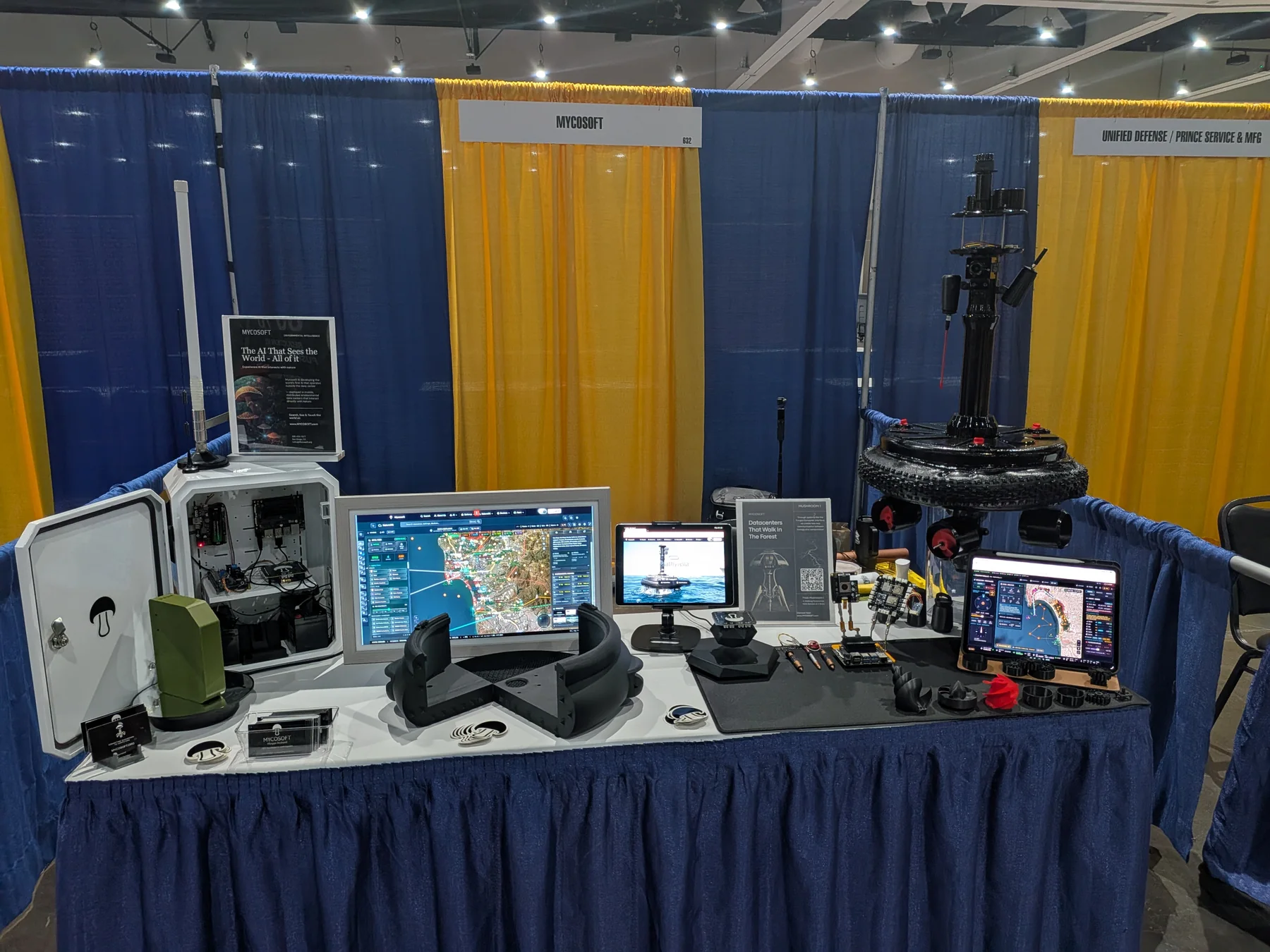
Mycosoft brings Psathyrella to defense-industry attendees at the San Diego Convention Center. Navy Gold Coast 2026 ↗
- Today
From instruments to Earth intelligence.
Mushroom 1, SporeBase, Hyphae 1, MycoNode, ALARM, Psathyrella and Agaric define a growing droid platform alongside NatureOS, MINDEX and MYCA. Meet the droids ↗
- The next phase
Selected for Phase 2.
A new phase for Mycosoft’s environmental intelligence work—and the next step from research toward practical applications.
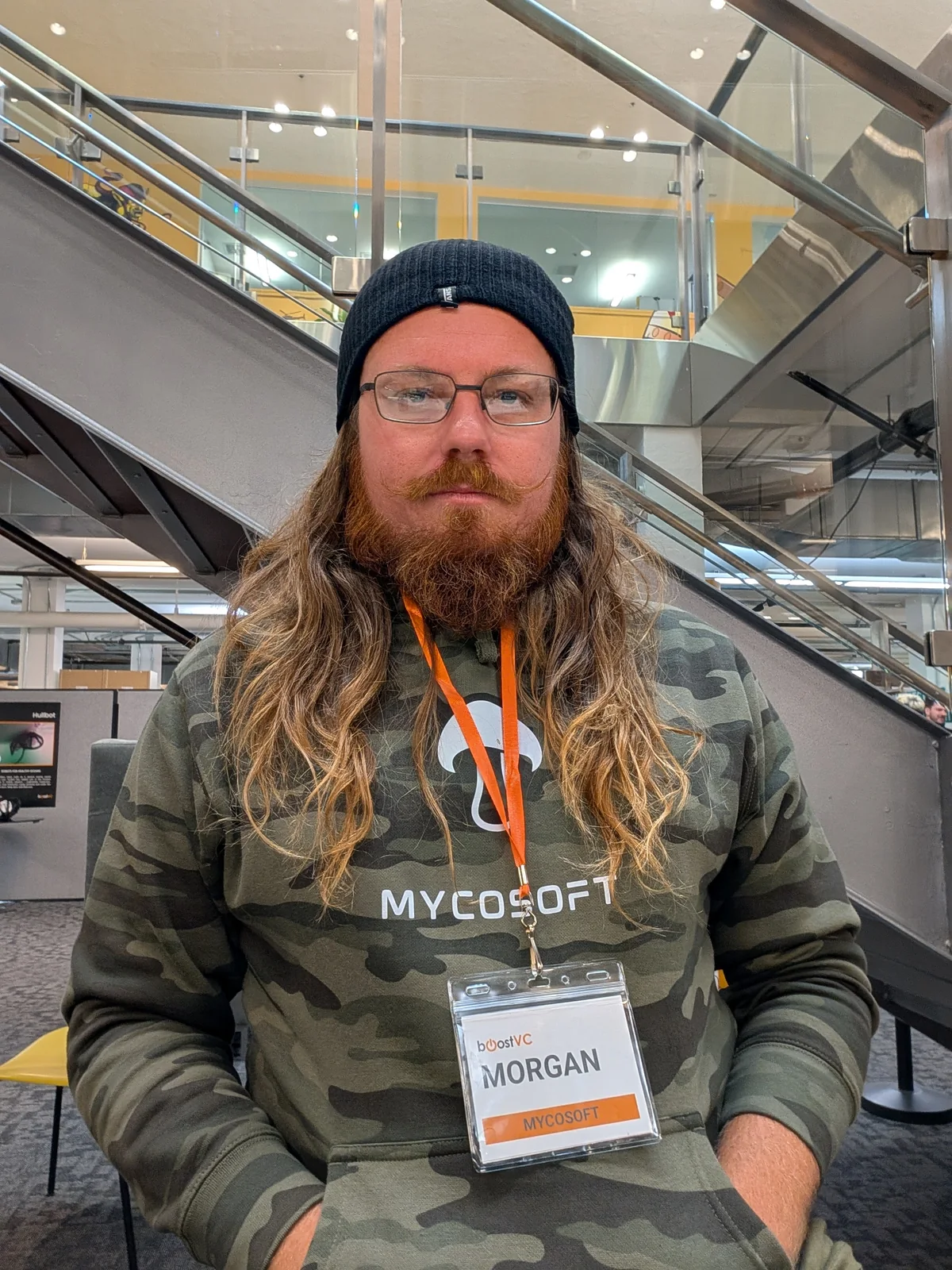
My story as Morgan Rockwell.
I did not come to fungi through branding. I came to them through systems. Construction taught me material reality. Bitcoin and embedded hardware taught me distributed trust, device networks, and signal flow. Mycology revealed a substrate that was already doing routing, exchange, adaptation, and persistence underground.12
Mycosoft’s early roots trace back to 2014, long before the present wave of AI enthusiasm. The company’s public story places the formal beginning in 2022, while the corporate entity — Mycosoft, Inc. — was incorporated in Delaware in October 2024.13 The throughline has stayed constant: use fungi, electronics, and software to build better interfaces to the living world.
That path was not assembled with a conventional venture-scale engineering organization. The development model has been deeply founder-led, AI-augmented, and self-hosted: local servers, edge devices, custom boards, sensor prototypes, and a fast cycle of design, code generation, testing, and hardware iteration built on owned infrastructure rather than rented cloud dependence alone.2
Hands-on building through family construction work established a bias toward physical systems, materials, and how things behave outside theory.
Work in cryptocurrency, devices, and networked hardware sharpened a view of computation as something distributed, embedded, and real.
Fungi reframed the problem: nature already runs a planetary mesh that senses gradients, moves nutrients, and reacts to disturbance.
The company became the place where those threads converged into one thesis: biological computing for environmental intelligence.
I am not trying to tell a prettier story about nature. I am trying to build the tools that let us read it, reason over it, and work with it.
Team
The people building Mycosoft.
Research, engineering and company operations, working together.

RJ Ricasata
CFO & Co-founder
Meet the Mycosoft teamSpore. Hypha. Mycelium.
If silicon taught computing to become precise, fungi may teach it to become distributed, adaptive, low-power, and materially grounded. Mycosoft uses the fungal lifecycle as both scientific subject and systems metaphor.
Portable encoded potential. A spore is a deployment seed — compact, mobile, resilient, carrying forward a future network not yet expanded. In computation terms, it resembles a minimal state package waiting for the right environment to instantiate.
The filament and the route. Hyphae are threads, growth fronts, edge actors. They sense gradients, branch, explore, and connect. They are the physical lines through which chemistry, nutrients, and bioelectric signals can propagate.
That distinction matters. Mycosoft does not reduce fungi to metaphor alone. The company’s working thesis is that fungal systems can be instrumented, translated, and eventually used as biological interfaces for sensing, actuation, and certain classes of analog or hybrid computation.458
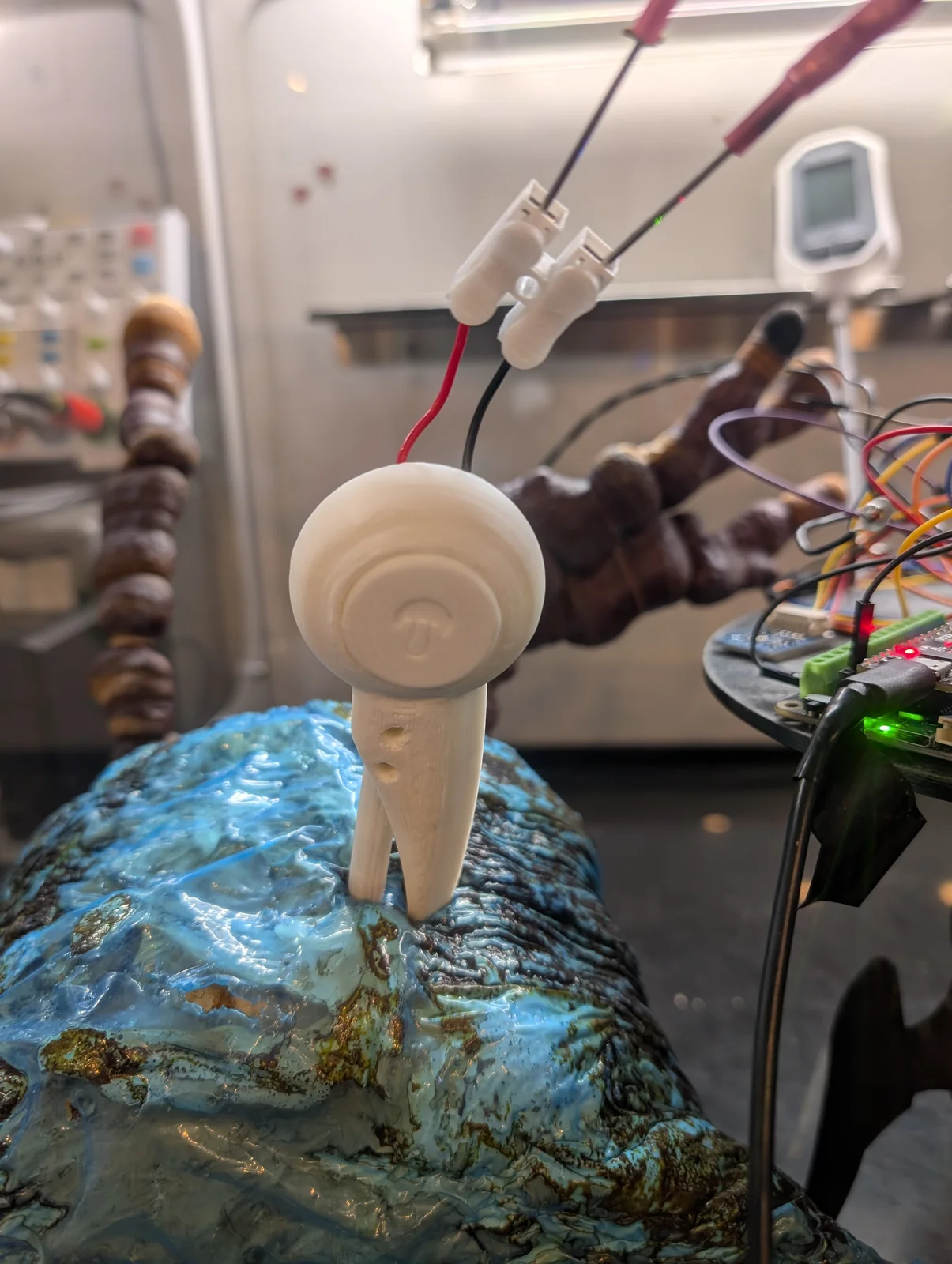
The claim is physical before it is philosophical.
Mycosoft’s view of fungi sits at the intersection of physics, chemistry, biology, and information theory. The work begins by asking what a fungal network can sense, how it transforms those signals, and how those patterns can be translated into useful data.
Physics
Fungal tissues exhibit measurable bioelectric activity: voltage shifts, oscillations, spikes, and patterns that can be amplified, digitized, filtered, and compared. The challenge is not whether signals exist. The challenge is extracting meaning from noisy, context-rich biological dynamics.56
Mycosoft’s internal theory work frames mycelial networks as a possible global sensory and communication layer within ecosystems. That remains a research thesis, not settled consensus — but it is a serious one, grounded in measurement, pattern recognition, and interface design rather than mysticism.4 In public-facing terms, the company describes these networks as a kind of biological internet: not identical to digital networking, but deeply resonant with it in topology, redundancy, and signal exchange.610
Measure the signals. Use probes, electrodes, gas sensors, environmental telemetry, and controlled stimuli to observe fungal state.
Fingerprint the patterns. Use filtering, time-series analysis, machine learning, and context labeling to connect electrical behavior to species, stressors, and environmental change.
Close the loop. Move from passive observation to bi-directional interface — reading signals from fungi and writing carefully controlled stimuli back into the system.
Efficient computing is not only about fewer watts per operation. It is also about how many layers of sensing, memory, adaptation, and matter can collapse into one substrate.
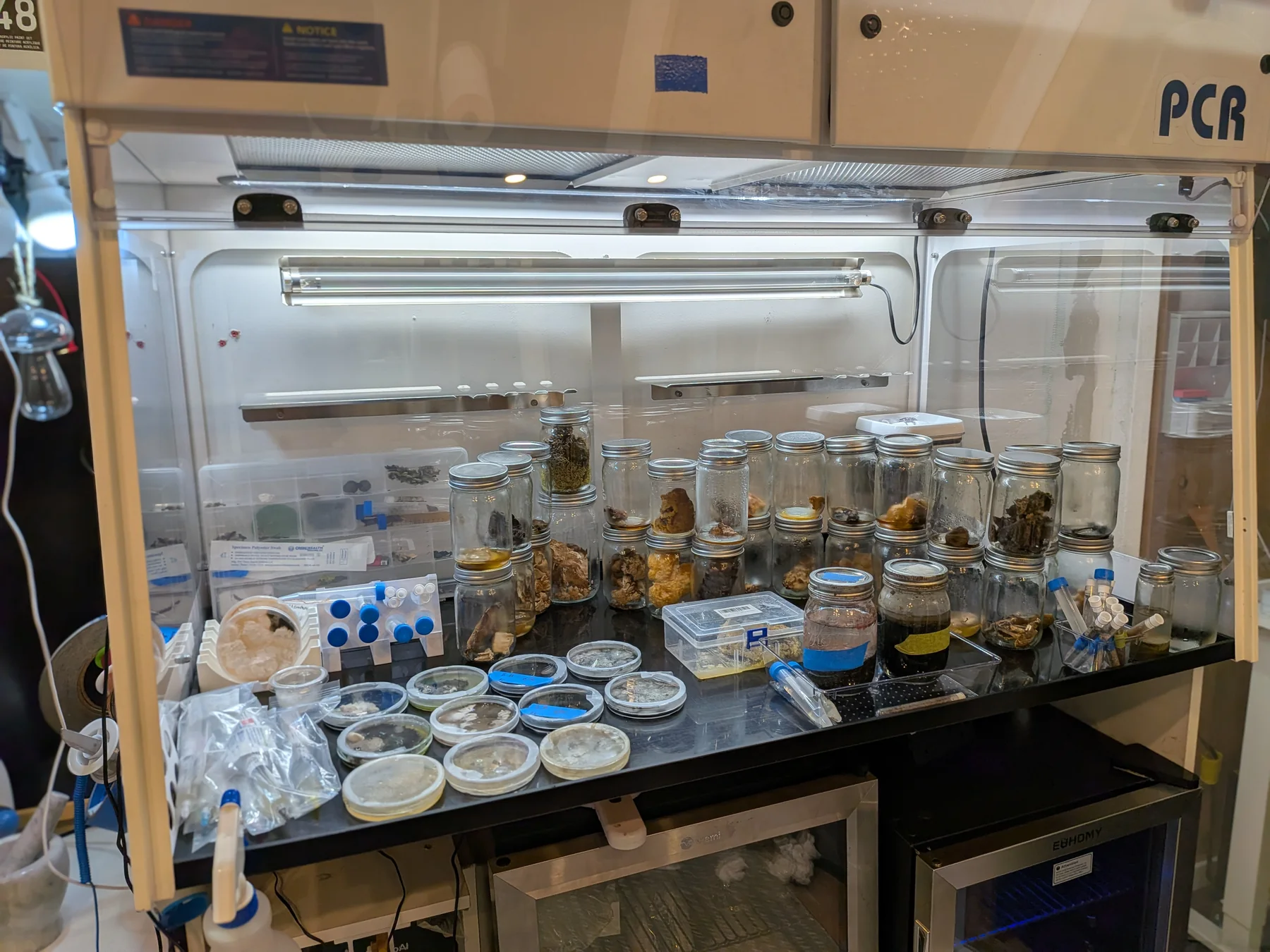
Mycosoft belongs in the long history of computation.
Every major computing transition widened the definition of what could count as a machine. The loom made pattern programmable. The telegraph made distance into signal. The transistor made switching microscopic. Networks made computation distributed. AI made language an interface. Mycosoft asks what happens when living matter joins the stack.
The Jacquard loom demonstrated that physical systems can be instructed. Matter can carry logic.
Telegraphy and later electronics turned state changes into transmission. The world became legible as pulse, code, and frequency.
Vacuum tubes and transistors separated switching from human action. Logic moved into hardware and scale accelerated.
The internet replaced isolated machines with routed graphs. Computation stopped being local by default.
Infrastructure became virtual, elastic, and API-mediated. State and execution separated from a single box.
Foundation models turned unstructured data into interface and prior. Human language became a control surface for complex systems.
Mycosoft extends that line by asking whether sensing, routing, pattern recognition, and response can partly live inside biological substrates themselves.
That is why the company’s thesis is not anti-silicon. It is post-single-substrate. Silicon remains essential. The point is that the next important interface may not be another abstract software wrapper. It may be a system where living networks, edge electronics, cloud models, and human operators co-produce the computation together.58
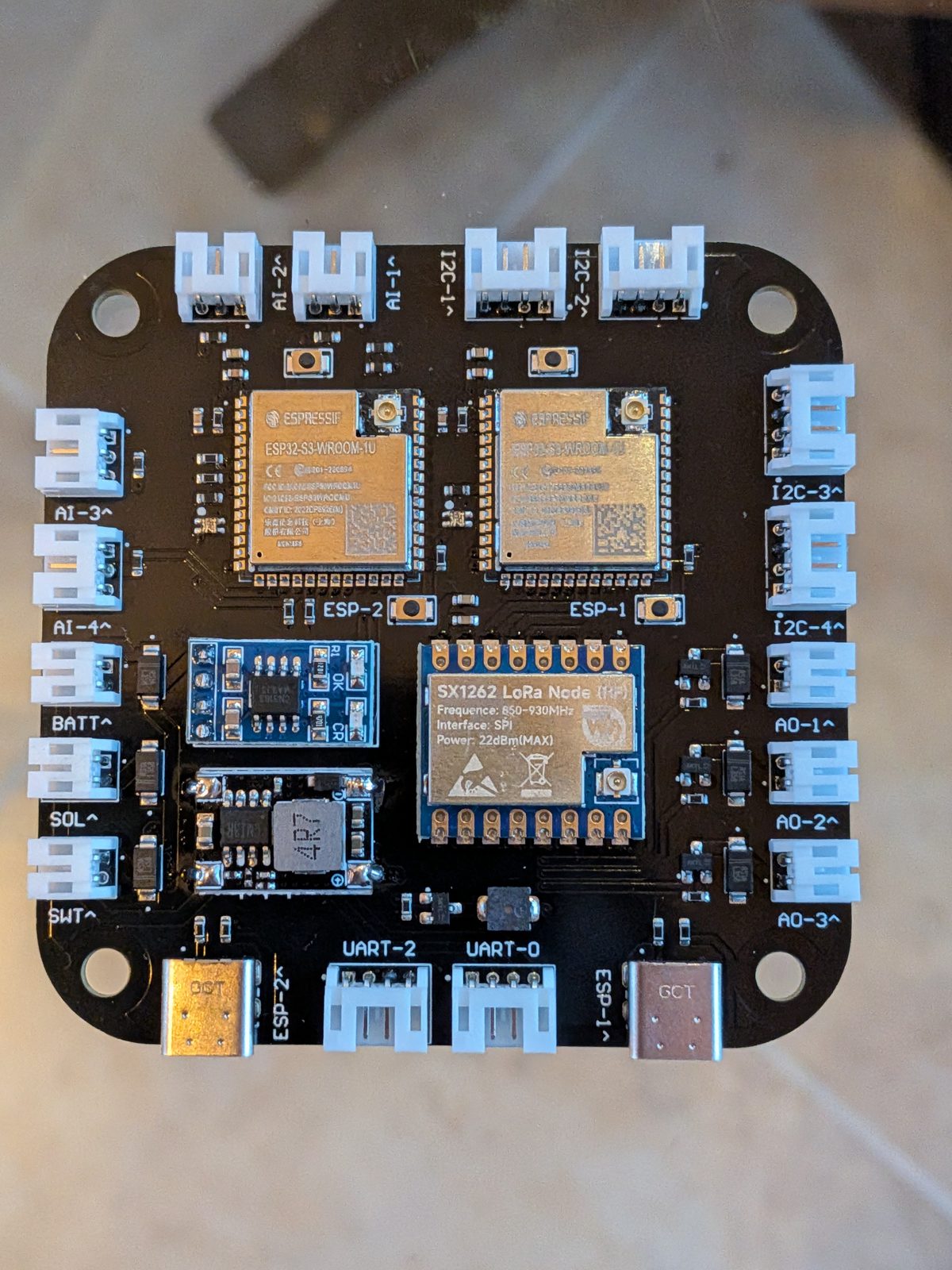
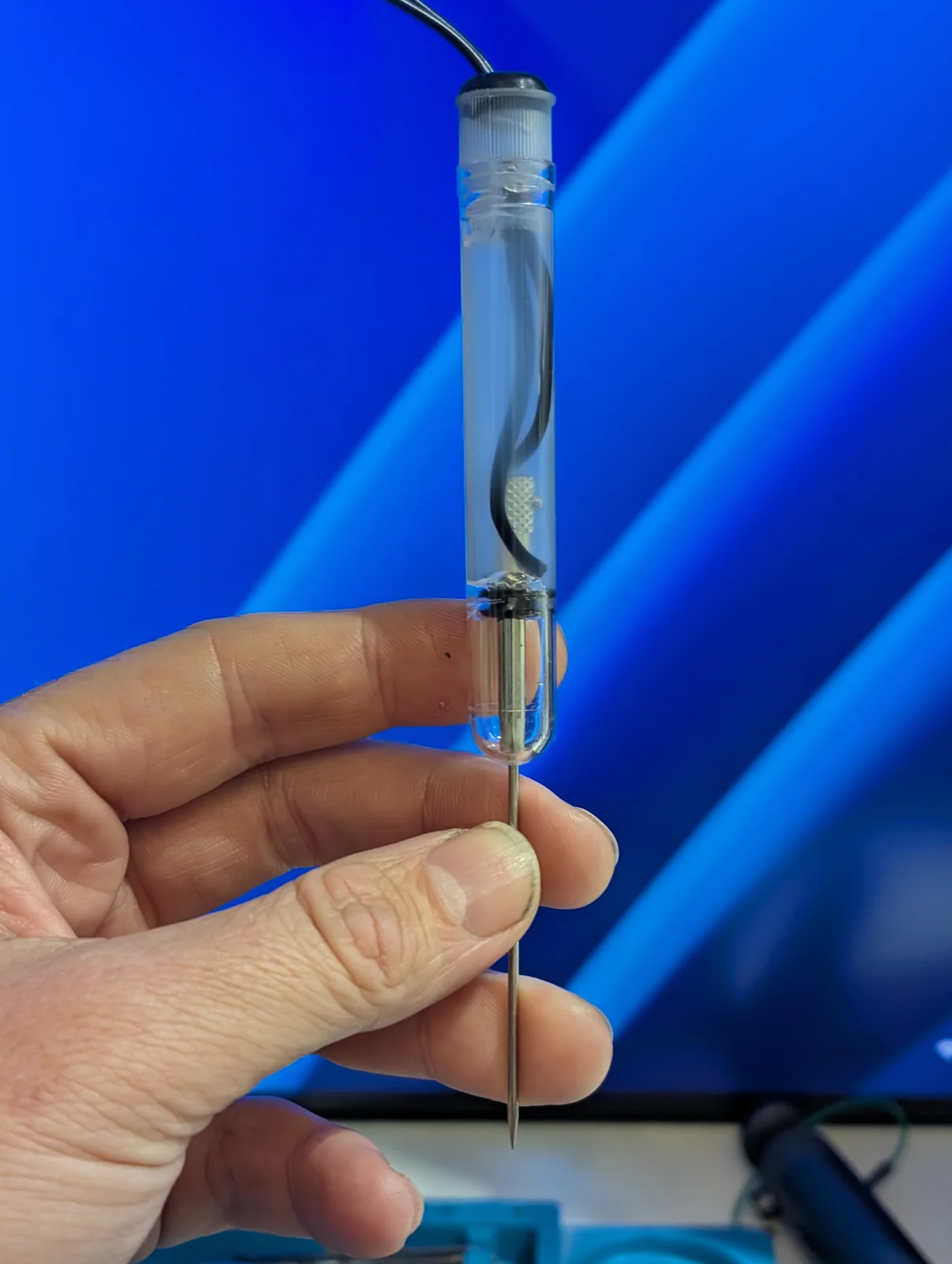
The Mycosoft stack.
The work becomes real only when the theory turns into hardware, software, interfaces, and operators. Mycosoft’s stack runs from the fungal substrate itself all the way up to multi-agent scientific reasoning.
Edge device fabric and interoperable messaging; observations retain source context through MINDEX and NatureOS.
Environmental intelligence connecting sensing, mapping and modeling in an operator workspace.
Nature Learning Model: a research architecture for learning from biological signals and environmental context.
Research framework for typed states, change, uncertainty and recovery experiments.
Governance and stewardship of proposed actions, evidence, constraints and authority.
Assistant and agent coordination across evidence, memory and permitted tools.
Evidence, provenance and biological/environmental records.
Workspace for devices, scientific tools, maps and environmental context.
FCI ↗Fungal Computer Interface probes bridge biological signals and electronics.
Petraeus ↗A living-culture and biological-computer interface in the development portfolio.
The shared sensing and controller platform behind Mycosoft devices.
Meet the droids.
The broader development portfolio also includes Petraeus, Tricorder and Mushroom 2. Explore all devices ↗
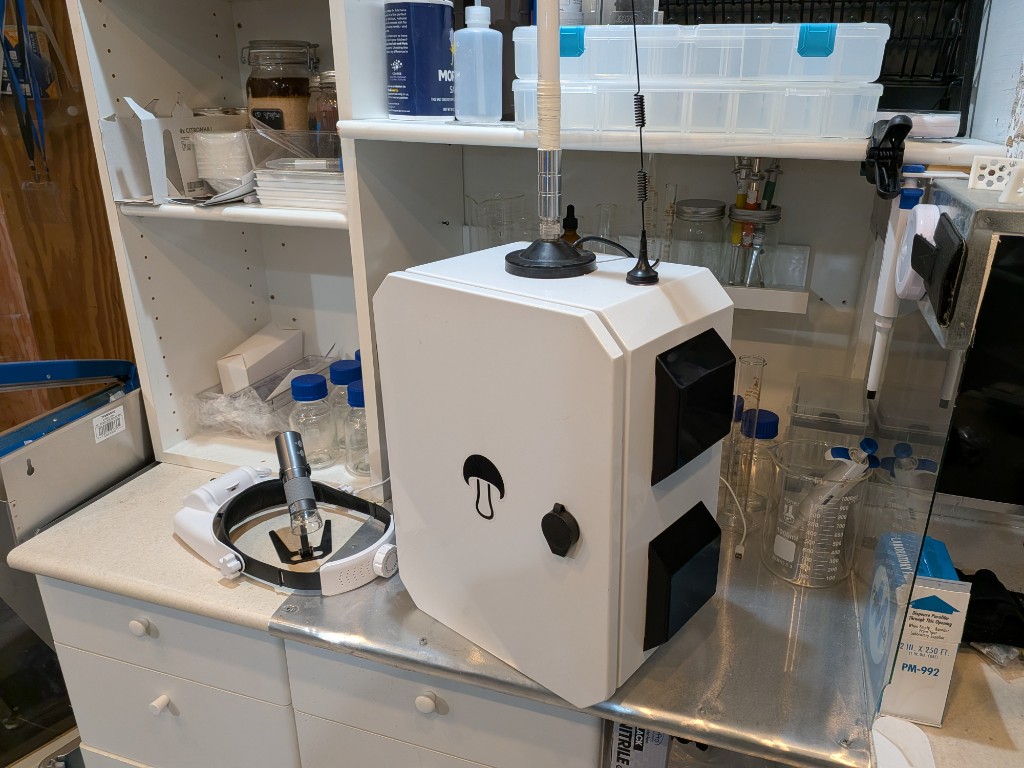
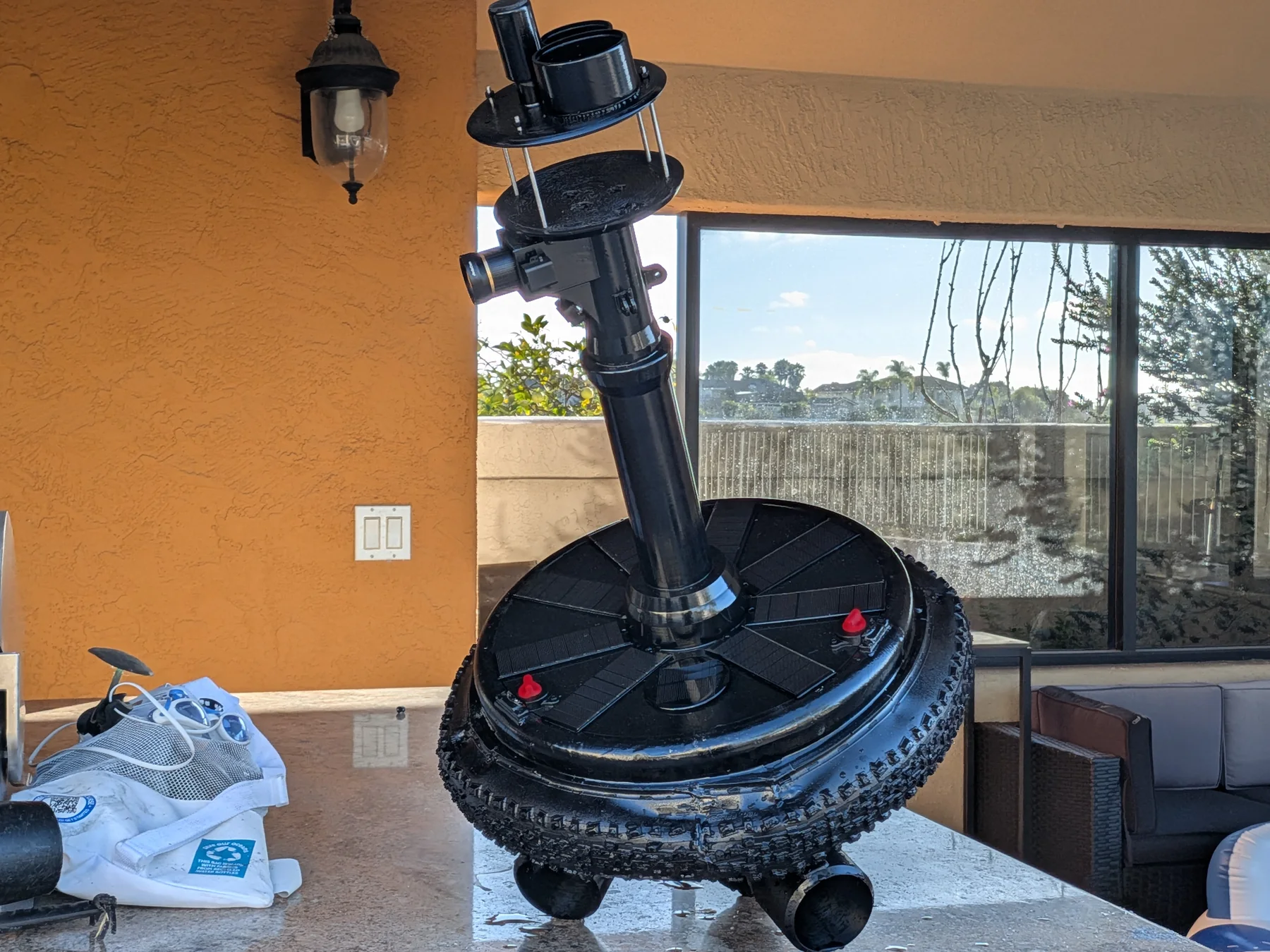
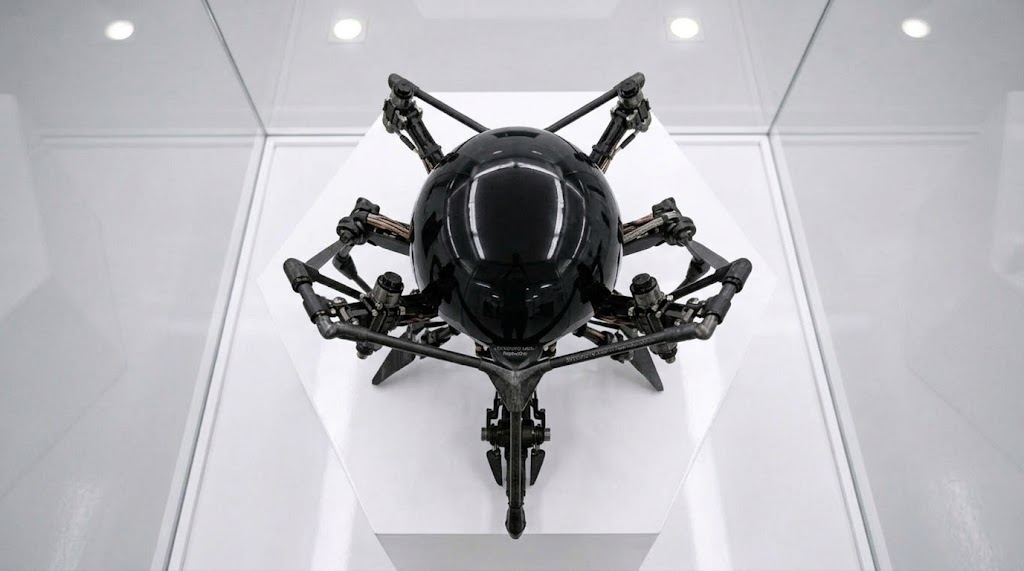
Sense. Predict. Influence.
The basic operating principle is simple enough to say in one breath and difficult enough to occupy a company for years: understand the current state of the environment, predict the next state, and act on the future with better timing and better evidence.
Understand the current state. Gather raw telemetry from fungi, air, soil, devices, and laboratories. Read the world as it is, not as a dashboard conveniently imagines it.
Influence the future state. Adjust sampling rates, deliver stimuli, run experiments, dispatch agents, or guide field response. Control here means steering with evidence, not pretending certainty.
Our work connects living systems with instruments, models and operators.
MYCA and grounded intelligence
MYCA extends the vision into a hybrid cloud-edge-biological architecture: models, plugins, robotics, lab instrumentation, edge devices, and fungal interfaces all connected through NatureOS, MINDEX, and the Mycorrhizae Protocol.8 The goal is not generic chat. The goal is scientific and environmental reasoning grounded in actual world-state.
In that world, language is not the first brain cell that fires. Sensors, state, memory, and evidence come first; language translates what the system has earned the right to say.
Closed-loop discovery
Mycosoft’s architecture pushes toward a loop in which simulation informs experiment, experiment updates models, and real-world feedback refines future action. That applies to environmental monitoring, fungal signal classification, protein design, metabolic engineering, and even exploratory analog computation using mycelial networks themselves.89
This is where the company’s scope becomes clear: sensors, probes, edge compute, databases, AI agents, field networks, and living matter are not separate programs. They are one system.
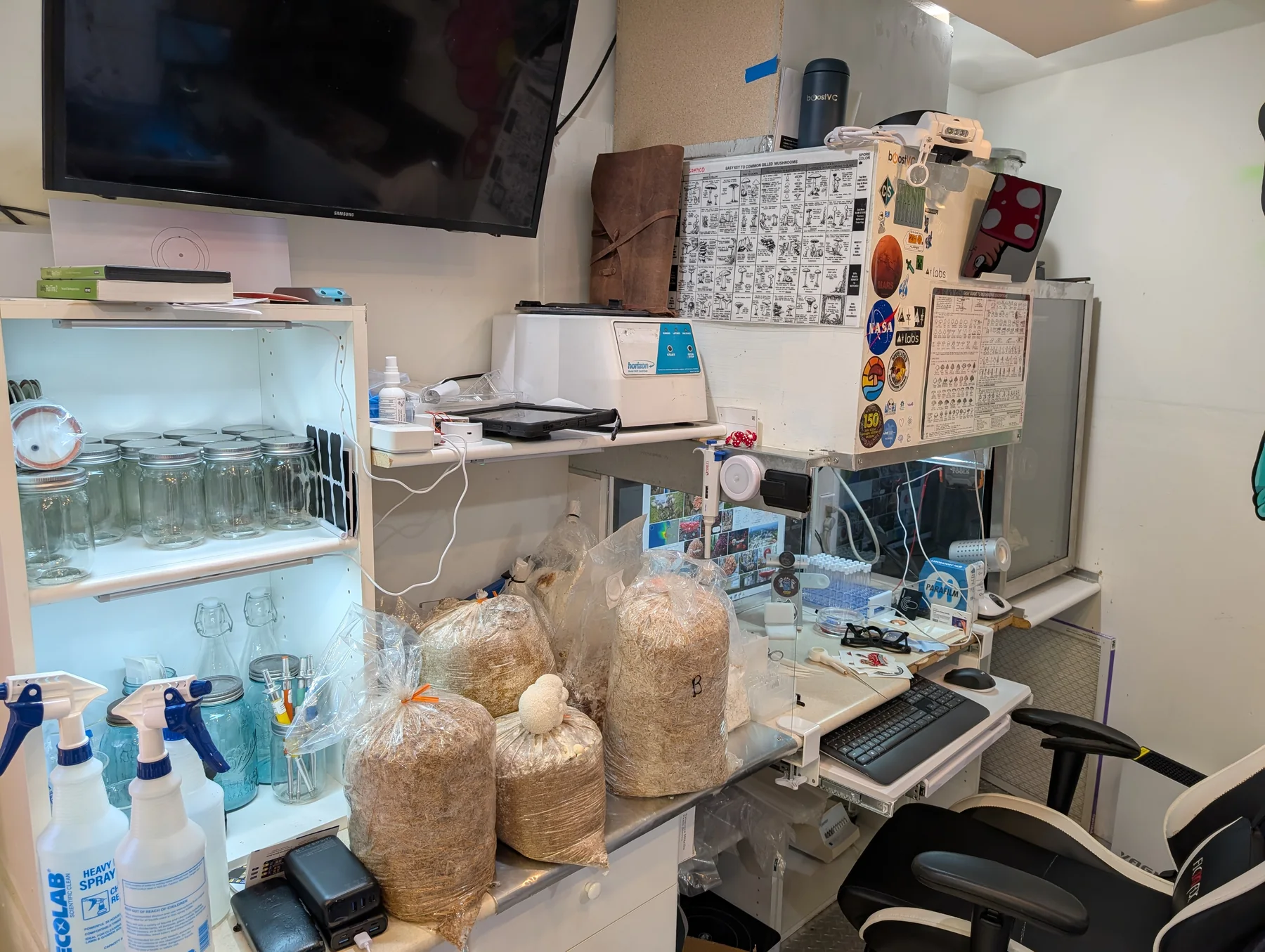
Why this aligns with Mycosoft’s vision and scope.
Mycosoft’s long-term direction is not a single gadget, a single model, or a single experiment. It is a planetary-scale environmental intelligence network powered by biological sensing and distributed AI systems.28
That means building durable hardware. It means building software that can absorb telemetry, preserve provenance, and expose truth through dashboards and APIs. It means building interfaces that allow MYCA and future systems to reason with fungi, not only about fungi. And it means taking the deepest lesson of mycelium seriously: robustness emerges when intelligence is distributed, localized, and connected.
This worldview connects three perspectives:
Scientific
Fungi as measurable biological systems with electrical, chemical, and ecological significance.
Computational
Distributed sensing, analog behavior, low-power interfaces, edge hardware, and hybrid cloud reasoning.
Civilizational
Environmental restoration, decentralized science, biological computing, and a more grounded relationship between intelligence and the Earth that sustains it.
We are not starting from nothing. We are starting from roots.
Mycosoft exists because the living world is richer than the abstractions we normally build on top of it. The company’s task is to turn that richness into instruments, interfaces, models, and machines without flattening it into a metaphor too early.
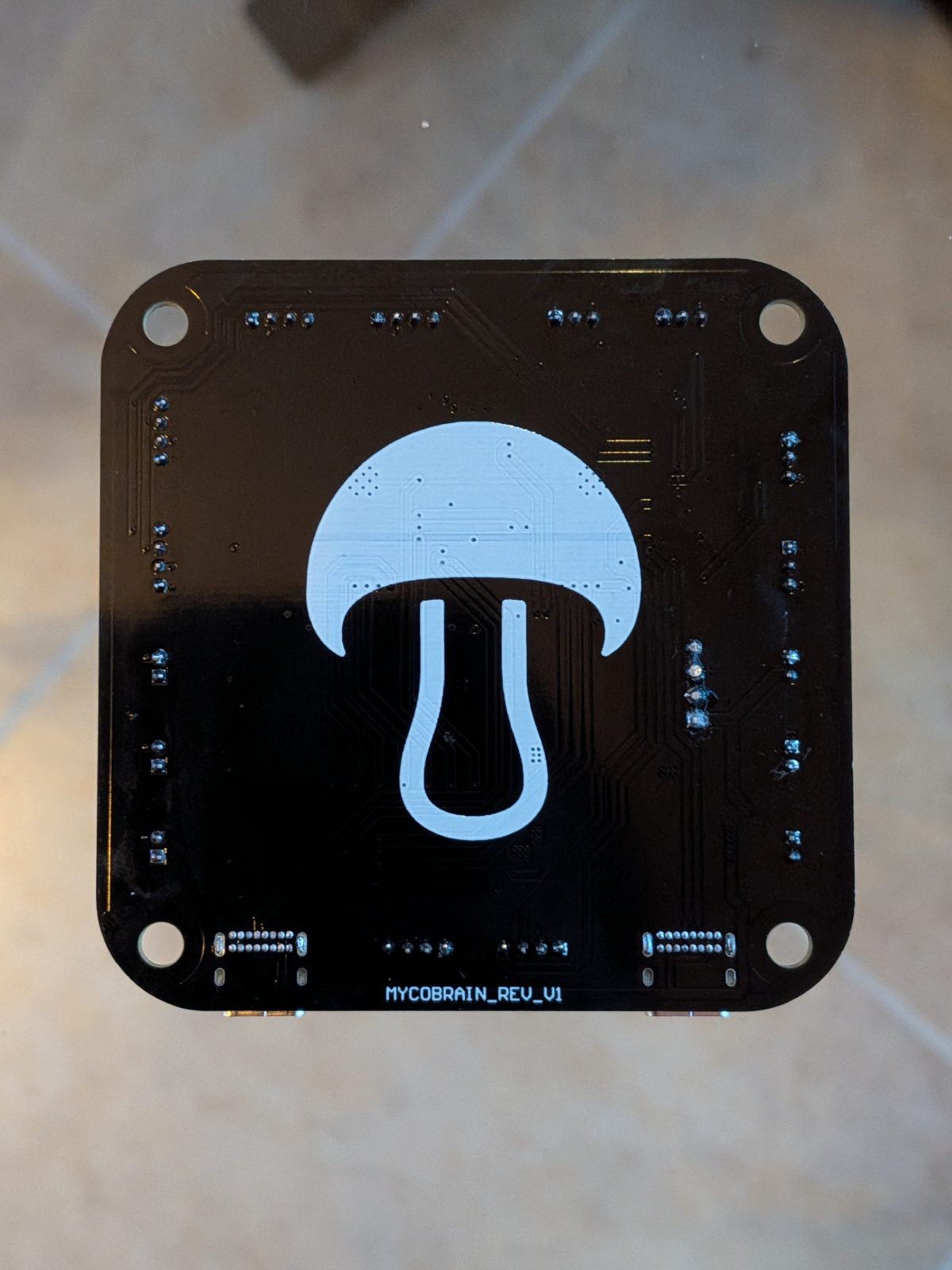
The mushroom is not a logo alone. It is a declaration of substrate. It says the next era of intelligent systems may not be built by stacking more software on the same assumptions. It may come from learning how living networks sense, store, adapt, and communicate — then designing the bridge.
Morgan Rockwell · Founder · Mycosoft
Nature already runs a planetary network.
Mycosoft is building the interface.
Sources & notes.
This page synthesizes Mycosoft’s current public web materials and internal working papers into one narrative. Where the underlying documents are research theses or architecture documents rather than externally validated scientific consensus, this page presents them as vision, research direction, or working architecture — not as established fact.
Company, founder narrative and architecture.
Over 5 trillion AI tokens used over two years, as of October 2026. Explore the company’s development and background.
Mycosoft, Inc. and Mycosoft, LLC company information.
February 10, 2026 theoretical framework; validation remains in progress.
Company-authored FCI whitepaper.
The NatureOS platform and environmental context.
Current public Mycosoft device portfolio.
Edge-native environmental intelligence architecture.
Research frameworks, biological interfaces and environmental science.
Biological sensing and FCI context.
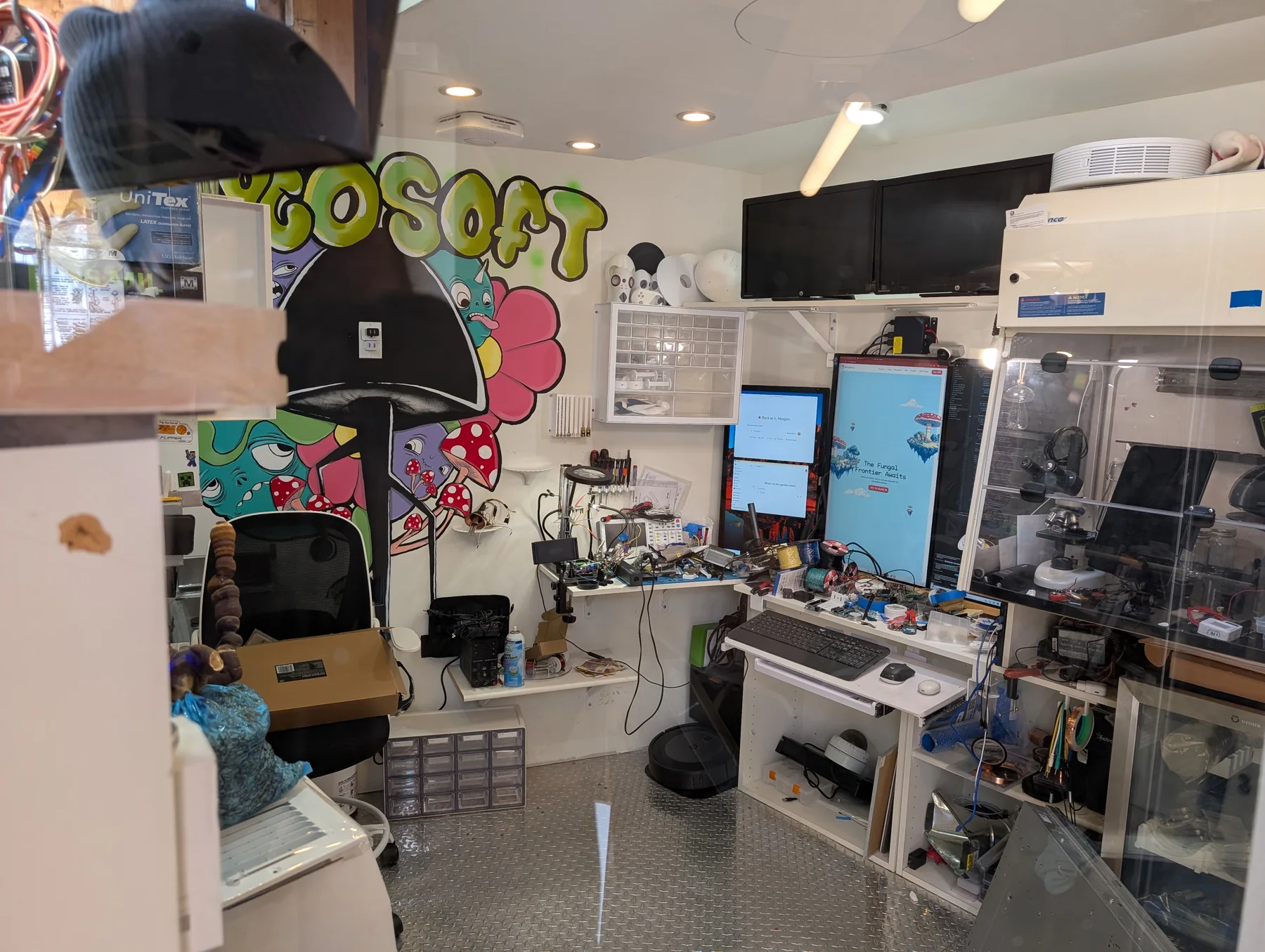
Founder-supplied company photography and public company materials.
The GFST section proposing analysis of fungal signals for environmental precursors; a research hypothesis.
Technical article draft/v0.1
Public review draft/v1.1
Architecture article
Architecture article
Company catalog date November13,2024
Company catalog date February9,2024
Company catalog date February13,2024
Implementation documentation, not a scientific result
Official company channel and films.